



Contributor
REGULAR CONTENT
The South Korea CDMO market was valued at $6.11 billion in 2025 and is expected to reach $10.14 billion by 2035. This growth is driven by robust domestic infrastructure and government prioritization of biopharma. In addition, strategic public-private investments, such as Lotte’s Songdo Bio Campus expansion and the government’s Third Five-Year Plan to double pharmaceutical exports by 2027, are unlocking significant opportunities. The Plan emphasizes doubling biopharma exports and expanding clinical trials nationwide. This policy is likely to foster innovation, increase investment, and accelerate the CDMO sector’s market value. South Korea aims to be one of the world’s top six pharmaceutical powerhouses by 2027.1
“Over the past decade, we watched South Korea continue to rise to become a global player in both development of innovative therapies and in the CDMO sector for pharma and biotech,” says Kurt R. Sedo, PharmaCircle vice president operations. “South Korean companies consistently appear in the top 5 in many categories such as pipeline, manufacturing, and funding.”
Additionally, favorable government policies and deregulation are improving international market access and operational flexibility for South Korean CDMOs. In January 2025, the South Korean Ministry of Health and Welfare introduced the Biopharmaceutical CDMO Support Act,” allowing CDMO exports without requiring a pharmaceutical manufacturing license. This reform is expected to eliminate major bottlenecks in logistics and licensing, enabling faster delivery and improving international positioning, thus bolstering market growth through enhanced export efficiency in the forecast period.1
Then there is the fallout from US-China relations. South Korean CDMOs are gaining attention from multinational clients looking to reduce reliance on Chinese CDMO partners amid geopolitical tensions and regulatory frameworks like the BIOSECURE Act and the 2026 National Defense Authorization Act. Expectations are that South Korean biotechs, particularly drug contract manufacturers, will see increased orders due to these US national security measures, accelerating global drug makers’ efforts to reconfigure supply chains away from “certain” foreign suppliers.2
Finally, Korean-based CDMOs are strengthening their global presence and competitiveness by setting up shop in the US, thus eliminating tariff risks. The US had threatened tariffs up to 250% on Korean pharmaceuticals, but in October, the Korean biopharma industry was granted Most-Favored-Nation (MFN) Tariff treatment on Korean drug exports. Under the deal, Korea’s pharma products are subject to a 15% tariff while generics are entirely exempted.3
Some key CDMO expansions in the US include Samsung Biologics and Celltrion. Samsung Biologics presented a three-pillar expansion strategy at the 2026 J.P. Morgan Healthcare Conference, focusing on manufacturing capacity, portfolio breadth, and global footprint to become a global top-tier CDMO. The company’s global manufacturing capacity will reach 845,000 liters following the completion of its $280 million acquisition of GSK’s Rockville, Maryland facility.4 This follows the CDMOs September 2025 announcement that it penned a $1.3 billion contract with an unidentified US drug maker and a $531 million deal with another undisclosed pharma back in May.
For its part in mitigating tariffs, Celltrion snagged Eli Lilly’s New Jersey drug substance plant back in September. The increased U.S. production capacity is also expected to curb costs related to US-bound shipments and external contract manufacturing expenses. The plant spans 37 acres, with another 10 reserved for future expansion. It is equipped to handle the full production cycle—from drug substance manufacturing to finished products—as well as packaging, logistics and sales. Celltrion stressed that the facility purchase from Lilly has “fully eliminated all potential future tariff risks related to its products in the U.S. market.”5 Competitor Celltrion South Korean company Celltrion has joined the competition to acquire US pharmaceutical production facilities. Celltrion completed the acquisition of biopharmaceutical production facilities in New Jersey, USA, and established a local production system in the United States. With this acquisition, Celltrion will reduce the time and cost burden of building new factories and secure production facilities that have already met the U.S. Best Drug Manufacturing and Quality Control Standards (cGMP).6
A Deep Dive into the South Korean CDMO Sector
The Korean CDMO market can be broken down into a few components: Active Pharmaceutical Ingredients (APIs); cell and gene therapy (CGT); and Antibody Drug Conjugates (ADCs).
Capitalizing on API Production
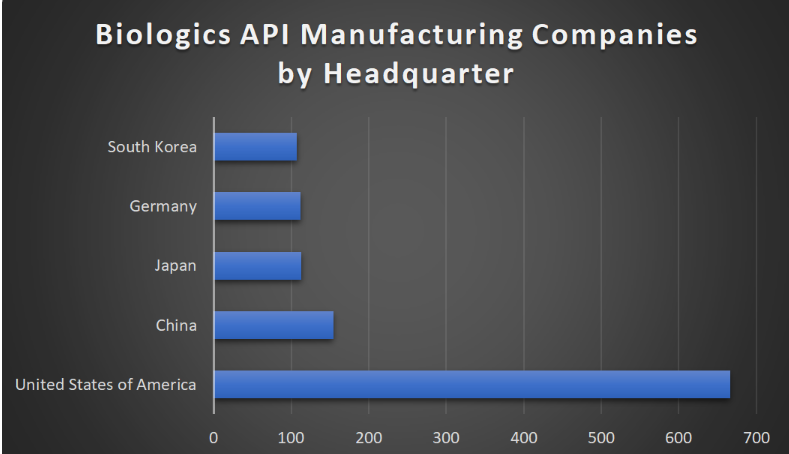
In terms of segment, API was the largest Korean CDMO revenue-generating product in 2024, valued at $6 billion and projected to reach $10 billion by 2033.7 With the global focus shifting toward biologics, biosimilars, and complex generics, South Korean CDMOs are capitalizing on these needs by providing high-end manufacturing solutions that meet international standards.7 For context, Korea’s ST Pharm has signed a contract worth $56 million with an unidentified US biotech to produce active pharmaceutical ingredients for a new treatment for severe hypertriglyceridemia.
Source: PharmaCircle LLC
Cell and Gene Therapy Outsourcing is Robust
The South Korea Cell Therapy CDMO market size is expected to triple from $2.3 billion this year to $6.5 billion in 2033. The sector accounted for approximately 55% of total market demand, reflecting robust outsourcing trends in cell therapy manufacturing. Demand is being driven by government-funded clinical trials and regenerative medicine policies aimed advancing Korea’s leadership in the biotech space.8
Korea-based ST Pharm, a global leader in oligonucleotide synthesis and a longtime manufacturer of small molecule active pharmaceutical ingredients (APIs), is making a strategic entry into the CRISPR gene editing CDMO market. the company aims to become a key partner in the development and production of next-generation gene therapies.9
ADCs Prove Lucrative
As global interest in ADCs soars, the market is projected to grow from about $10 billion in 2023 to $28 billion by 2028. South Korea has been quick to ride this wave – the country now accounts for roughly 10% of global ADC clinical research, ranking third worldwide after the United States (40%) and China (30%). Korean pharmaceutical and biotech companies are actively developing ADC pipelines and engaging in co-development partnerships to advance these therapies.10
The importance of ADC development is not escaping the Korean government. Pinotbio, an ADC specialist, has been selected as the primary contractor for the Ministry of Trade, Industry, and Energy’s (MOTIE) “Material and Component Technology Development Project.” This initiative aims to localize ADC production and establish large-scale manufacturing infrastructure, with a total budget of $15.3 million. Pinotbio will spearhead the development of ADC synthesis technologies for preclinical and clinical sample production, Kyongbo Pharmaceutical and KBIOHealth will focus on large-scale synthesis and purification of critical raw materials, and Nexa will develop an AI-based automated ADC manufacturing system. Upon completion in December 2028, the initiative is expected to enable the domestic production of high-quality ADCs at competitive prices.11
The ADC has been lucrative for many CDMOs, namely Samsung Biologics, which just secured land for a manufacturing campus that will boost capabilities in advanced conjugation, cell and gene therapies, and antibody vaccines. In fact, the CDMO just became the first Korean biopharma to hit $2 trillion in profit last year.12
In May 2024, Lotte Biologics broke ground on a $3.3 billion mega-plant in Incheon’s Songdo Bio Campus, aiming to boost its biologics capacity to 360,000 liters and increase its share in the global CDMO market.1 This January, Lotte and Rakuten Medical, Inc. agreed to have the CDMO provide advanced manufacturing services for monoclonal antibody intermediates and their conjugates, supporting Rakuten Medical’s global clinical development and future commercialization. Lotte is also preparing its first plant located just west of Seoul, aiming to begin commercial production in 2027.13 Also in the ADC space is ABL Bio has created US subsidiary Neok Bio and is providing financing to take two ADC experimental cancer drugs into first-in-human studies in 2026.11
Internal Strength Fortifies the External Supply Chain
From government involvement to increased demand for biologics, South Korean CDMOs are working to position the country and themselves as a key partner in the global pharmaceutical supply chain. However, in April, a report from the Korea Institute of Science & Technology Evaluation and Planning (KISTEP) showed that the country is lagging behind other major nations in implementing systems to address pharmaceutical supply chain instabilities. Although South Korean authorities have supported research and development for emerging epidemics and promoted domestic manufacturing of essential medications, the report highlights significant gaps in other areas. These include inadequate support for domestic companies to secure raw materials, expand manufacturing facilities, and localize ingredient production. Such deficiencies leave the country vulnerable to global supply chain disruptions.14
On the bright side, the researchers expressed optimism about the potential for progress. “With sustained government support over the next five years, South Korea could establish a holistic system for pharmaceutical supply stabilization, resolving supply shortages for specific medications by 2030.”14
The South Korea CDMO market was valued at $6.11 billion in 2025 and is expected to reach $10.14 billion by 2035. This growth is driven by robust domestic infrastructure and government prioritization of biopharma. In addition, strategic public-private investments, such as Lotte’s Songdo Bio Campus expansion and the government’s Third Five-Year Plan to double pharmaceutical exports by 2027, are unlocking significant opportunities. The Plan emphasizes doubling biopharma exports and expanding clinical trials nationwide. This policy is likely to foster innovation, increase investment, and accelerate the CDMO sector’s market value. South Korea aims to be one of the world’s top six pharmaceutical powerhouses by 2027.1
“Over the past decade, we watched South Korea continue to rise to become a global player in both development of innovative therapies and in the CDMO sector for pharma and biotech,” says Kurt R. Sedo, PharmaCircle vice president operations. “South Korean companies consistently appear in the top 5 in many categories such as pipeline, manufacturing, and funding.”
Additionally, favorable government policies and deregulation are improving international market access and operational flexibility for South Korean CDMOs. In January 2025, the South Korean Ministry of Health and Welfare introduced the Biopharmaceutical CDMO Support Act,” allowing CDMO exports without requiring a pharmaceutical manufacturing license. This reform is expected to eliminate major bottlenecks in logistics and licensing, enabling faster delivery and improving international positioning, thus bolstering market growth through enhanced export efficiency in the forecast period.1
Then there is the fallout from US-China relations. South Korean CDMOs are gaining attention from multinational clients looking to reduce reliance on Chinese CDMO partners amid geopolitical tensions and regulatory frameworks like the BIOSECURE Act and the 2026 National Defense Authorization Act. Expectations are that South Korean biotechs, particularly drug contract manufacturers, will see increased orders due to these US national security measures, accelerating global drug makers’ efforts to reconfigure supply chains away from “certain” foreign suppliers.2
Finally, Korean-based CDMOs are strengthening their global presence and competitiveness by setting up shop in the US, thus eliminating tariff risks. The US had threatened tariffs up to 250% on Korean pharmaceuticals, but in October, the Korean biopharma industry was granted Most-Favored-Nation (MFN) Tariff treatment on Korean drug exports. Under the deal, Korea’s pharma products are subject to a 15% tariff while generics are entirely exempted.3
Some key CDMO expansions in the US include Samsung Biologics and Celltrion. Samsung Biologics presented a three-pillar expansion strategy at the 2026 J.P. Morgan Healthcare Conference, focusing on manufacturing capacity, portfolio breadth, and global footprint to become a global top-tier CDMO. The company’s global manufacturing capacity will reach 845,000 liters following the completion of its $280 million acquisition of GSK’s Rockville, Maryland facility.4 This follows the CDMOs September 2025 announcement that it penned a $1.3 billion contract with an unidentified US drug maker and a $531 million deal with another undisclosed pharma back in May.
For its part in mitigating tariffs, Celltrion snagged Eli Lilly’s New Jersey drug substance plant back in September. The increased U.S. production capacity is also expected to curb costs related to US-bound shipments and external contract manufacturing expenses. The plant spans 37 acres, with another 10 reserved for future expansion. It is equipped to handle the full production cycle—from drug substance manufacturing to finished products—as well as packaging, logistics and sales. Celltrion stressed that the facility purchase from Lilly has “fully eliminated all potential future tariff risks related to its products in the U.S. market.”5 Competitor Celltrion South Korean company Celltrion has joined the competition to acquire US pharmaceutical production facilities. Celltrion completed the acquisition of biopharmaceutical production facilities in New Jersey, USA, and established a local production system in the United States. With this acquisition, Celltrion will reduce the time and cost burden of building new factories and secure production facilities that have already met the U.S. Best Drug Manufacturing and Quality Control Standards (cGMP).6
A Deep Dive into the South Korean CDMO Sector
The Korean CDMO market can be broken down into a few components: Active Pharmaceutical Ingredients (APIs); cell and gene therapy (CGT); and Antibody Drug Conjugates (ADCs).
Capitalizing on API Production
In terms of segment, API was the largest Korean CDMO revenue-generating product in 2024, valued at $6 billion and projected to reach $10 billion by 2033.7 With the global focus shifting toward biologics, biosimilars, and complex generics, South Korean CDMOs are capitalizing on these needs by providing high-end manufacturing solutions that meet international standards.7 For context, Korea’s ST Pharm has signed a contract worth $56 million with an unidentified US biotech to produce active pharmaceutical ingredients for a new treatment for severe hypertriglyceridemia.
Source: PharmaCircle LLC
Cell and Gene Therapy Outsourcing is Robust
The South Korea Cell Therapy CDMO market size is expected to triple from $2.3 billion this year to $6.5 billion in 2033. The sector accounted for approximately 55% of total market demand, reflecting robust outsourcing trends in cell therapy manufacturing. Demand is being driven by government-funded clinical trials and regenerative medicine policies aimed advancing Korea’s leadership in the biotech space.8
Korea-based ST Pharm, a global leader in oligonucleotide synthesis and a longtime manufacturer of small molecule active pharmaceutical ingredients (APIs), is making a strategic entry into the CRISPR gene editing CDMO market. the company aims to become a key partner in the development and production of next-generation gene therapies.9
ADCs Prove Lucrative
As global interest in ADCs soars, the market is projected to grow from about $10 billion in 2023 to $28 billion by 2028. South Korea has been quick to ride this wave – the country now accounts for roughly 10% of global ADC clinical research, ranking third worldwide after the United States (40%) and China (30%). Korean pharmaceutical and biotech companies are actively developing ADC pipelines and engaging in co-development partnerships to advance these therapies.10
The importance of ADC development is not escaping the Korean government. Pinotbio, an ADC specialist, has been selected as the primary contractor for the Ministry of Trade, Industry, and Energy’s (MOTIE) “Material and Component Technology Development Project.” This initiative aims to localize ADC production and establish large-scale manufacturing infrastructure, with a total budget of $15.3 million. Pinotbio will spearhead the development of ADC synthesis technologies for preclinical and clinical sample production, Kyongbo Pharmaceutical and KBIOHealth will focus on large-scale synthesis and purification of critical raw materials, and Nexa will develop an AI-based automated ADC manufacturing system. Upon completion in December 2028, the initiative is expected to enable the domestic production of high-quality ADCs at competitive prices.11
The ADC has been lucrative for many CDMOs, namely Samsung Biologics, which just secured land for a manufacturing campus that will boost capabilities in advanced conjugation, cell and gene therapies, and antibody vaccines. In fact, the CDMO just became the first Korean biopharma to hit $2 trillion in profit last year.12
In May 2024, Lotte Biologics broke ground on a $3.3 billion mega-plant in Incheon’s Songdo Bio Campus, aiming to boost its biologics capacity to 360,000 liters and increase its share in the global CDMO market.1 This January, Lotte and Rakuten Medical, Inc. agreed to have the CDMO provide advanced manufacturing services for monoclonal antibody intermediates and their conjugates, supporting Rakuten Medical’s global clinical development and future commercialization. Lotte is also preparing its first plant located just west of Seoul, aiming to begin commercial production in 2027.13 Also in the ADC space is ABL Bio has created US subsidiary Neok Bio and is providing financing to take two ADC experimental cancer drugs into first-in-human studies in 2026.11
Internal Strength Fortifies the External Supply Chain
From government involvement to increased demand for biologics, South Korean CDMOs are working to position the country and themselves as a key partner in the global pharmaceutical supply chain. However, in April, a report from the Korea Institute of Science & Technology Evaluation and Planning (KISTEP) showed that the country is lagging behind other major nations in implementing systems to address pharmaceutical supply chain instabilities. Although South Korean authorities have supported research and development for emerging epidemics and promoted domestic manufacturing of essential medications, the report highlights significant gaps in other areas. These include inadequate support for domestic companies to secure raw materials, expand manufacturing facilities, and localize ingredient production. Such deficiencies leave the country vulnerable to global supply chain disruptions.14
On the bright side, the researchers expressed optimism about the potential for progress. “With sustained government support over the next five years, South Korea could establish a holistic system for pharmaceutical supply stabilization, resolving supply shortages for specific medications by 2030.”14
-
Celltrion snaps up Lilly’s NJ drug substance plant for $330M in tariff mitigation move, pledges to retain employees, by Frasier Kansteiner, Fierce Pharma, September 23, 2025.
-
Samsung Bio sticks landing on 2025 as it becomes first Korean biopharma to hit 2T won profit threshold, Fierce Pharma, by Frasier Kansteiner, January 22, 2026.
-
South Korea’s Samsung Biologics, Celltrion log stellar performances, by Tae-gyu Kim, UPI, July 24, 2025.